
Your streak is growing but your speaking isn't. Here's why most English apps are built to keep you opening them, not to make you fluent, and which ones actually bridge that gap.
Months of daily streaks, hundreds of XP points, a satisfying chain of green checkmarks, and then a native English speaker says something at normal speed and your mind goes completely blank. The common assumption is that if you just stay consistent with your app and keep your streak alive, you will eventually become conversational in English. That gap between app progress and real conversation is an architecture problem, and understanding it changes everything about how you choose where to spend your time. See our learn Spanish for how this works in practice.
"Most English learning apps focus on exercises, quizzes, and streaks that feel like homework, failing to build real conversational ability, leaving users 'fluent on paper but silent in real life'."
— what we hear from English language learners
The feeling of improvement is not the same as actual improvement. According to a Prezi analysis of retention strategies, the core mechanics behind popular gamified apps, streak counters, XP, virtual currency, and celebratory animations, are engineered to reward daily logins and task completion, not language acquisition. The result is a dopamine loop that feels productive while leaving the brain's actual speech circuitry completely untouched.
Language acquisition requires comprehensible input, real spoken and written content pitched just above your current level, so your brain can map meaning without conscious translation. Stephen Krashen's foundational research established this decades ago, and it remains the most replicated finding in applied linguistics.
Recognition tasks, matching words, translating sentences, tapping the correct tile, train pattern-matching. A Scilit review of learning outcomes found that gamification mechanics do not reliably translate into communicative competence or real-world spoken fluency. Every minute spent tapping grammar tiles is a minute the brain's input-acquisition circuitry sat idle.
For busy learners fitting practice into a commute or a lunch break, those minutes are the entire budget. Spending them on XP farming is the real loss. One question cuts through every feature list: does this app expose me to real people speaking naturally, or does it ask me to manipulate isolated words and sentences?
Key takeaways
Streaks and XP measure how loyal you are to an app, not how close you are to holding a real conversation.
The gap between app progress and real fluency is structural, most apps are built around engagement mechanics, not the way brains acquire language.
Comprehensible input, hearing and reading English at a level just above yours, in context you care about, is the mechanism behind actual acquisition, not grammar drills dressed as games.
Download counts and App Store star ratings reflect marketing budgets; the only metric worth checking is whether users report conversational ability after consistent use.
Matching an app to your skill level and daily schedule matters more than picking the highest-rated option, a tool you use for ten minutes on a commute beats a premium course you open twice.
The scrolling habit already running on autopilot every day is an untapped study session, the question is whether it's pointed at something that builds fluency or just burns time.
Parrot's short-form video feed closes the loop by replacing mindless scrolling with a TikTok-style stream of native English speakers delivering comprehensible input, the same idle minutes, pointed at real acquisition.
The Real Criteria for Choosing an English App That Builds Speaking Ability Not Just XP Points
Many learners who have already moved to an English-speaking country still feel nervous during small talk or when discussing work achievements, not because they haven't put in the hours, but because the hours they put in never required them to produce spoken output under real pressure.
How to Spot an App That Prioritizes Retention Over Fluency
The majority of its learners cite "casual/fun" or "brain training" as their primary motivation, not conversational fluency, a candid admission in Duolingo's own Language Report 2023. None of those mechanics measure whether you can hold a real conversation under pressure, recall a word when a colleague asks you something unexpected, or keep a sentence going when your brain stalls.
That last scenario, the brain stall, is one of the most common experiences among non-native English speakers in real-world interactions. Words that felt secure inside an app evaporate the moment a real person is waiting for a response.
Most apps never simulate authentic conversational pressure. And real-world listening comprehension, following a native speaker's pace, accent, and vocabulary in context, is a separate skill that textbook-style exercises almost never train.
Three design patterns signal retention-first thinking:
The app tracks activity rather than output: points accumulate for tapping correct answers, not for producing spoken sentences.
Sessions are structured around completion rates, not comprehension depth.
Progress indicators reset your attention toward the app's internal economy rather than toward real-world use.
The Plain-Language Rubric - Three Questions to Ask Any App Before You Download It
App Evaluation Checklist, Ask These 3 Questions Before You Download
#
Question
What a Strong Answer Looks Like
1
Does the app require you to produce spoken output, not just recognize correct answers?
Yes, it records, scores, or responds to your voice
2
Does it expose you to real-world English from native speakers? (Krashen's comprehensible input principle)
Yes, authentic audio/video at native speed, matched to your level
3
Does it fit the time gaps you already have rather than demanding a dedicated 30-min block?
Yes, short sessions that fit into existing routines, no scheduling required
If an app fails two or more of these checks, treat it as a habit tool, not a fluency tool.
Industry research confirms that short, frequent sessions aligned with existing daily routines drive higher retention than scheduled study blocks. Parrot is built around exactly that principle.
Where output practice is the goal, Parrot's speaking feature, Parrot Back, requires you to actually produce spoken sentences rather than tap a correct answer, directly addressing the hesitation and word-retrieval failures that surface in live conversations. Its AI Spanish Tutor layer adds personalized feedback during or after video sessions, so the practice stays active rather than passive.
What Babbel and Duolingo Each Actually Optimize For
The honest trade-off: Duolingo builds the habit, and for absolute beginners that consistency is genuinely valuable. Neither was designed primarily around producing fluent spoken output in real-world conditions, but each delivers measurable value within its own scope.
The 10 Best Apps to Learn English in 2026 Ranked by Real Fluency Outcomes
Every app in the list below can now be read against what it actually delivers, and the first thing that lens exposes is how misleading the standard rankings are. Download counts and App Store stars measure marketing spend, not whether you can hold a real conversation after three months of daily use. The apps that dominate "best of" lists are ranked by user volume and engagement features, but the learners who actually reach conversational fluency are the ones whose daily tool exposes them to real, native-speed content rather than controlled, gamified drills. Ranking apps by download numbers or streak mechanics is the wrong lens entirely. The meaningful differentiator is how closely each app's daily input mirrors the way a brain naturally absorbs a language.
One more lens every serious ranking must apply: pricing transparency. A recurring frustration among English learners is discovering that an app advertised as free locks its core value behind a mandatory paywall after only a short engagement window, sometimes as little as 20 minutes in. That bait-and-switch erodes trust and wastes the learner's most motivated early hours. Every entry below names what is genuinely free and what requires a subscription, so you know exactly what you are paying for before you invest your time.
The ten apps below are ordered by one criterion: does this app build your ability to hold a real English conversation, or does it build something else (habit, vocabulary recognition, grammar awareness) that may or may not get you there? Both outcomes have value, but knowing which one you are paying for changes everything about which app belongs on your phone.
The ten apps ranked are:
Parrot
Duolingo
ELSA Speak
Babbel
italki
Cambly
HelloTalk
FluentU
LingoClip
Anki
1. Parrot - Best App for Turning Daily Short-Form Video Scrolling into English Immersion
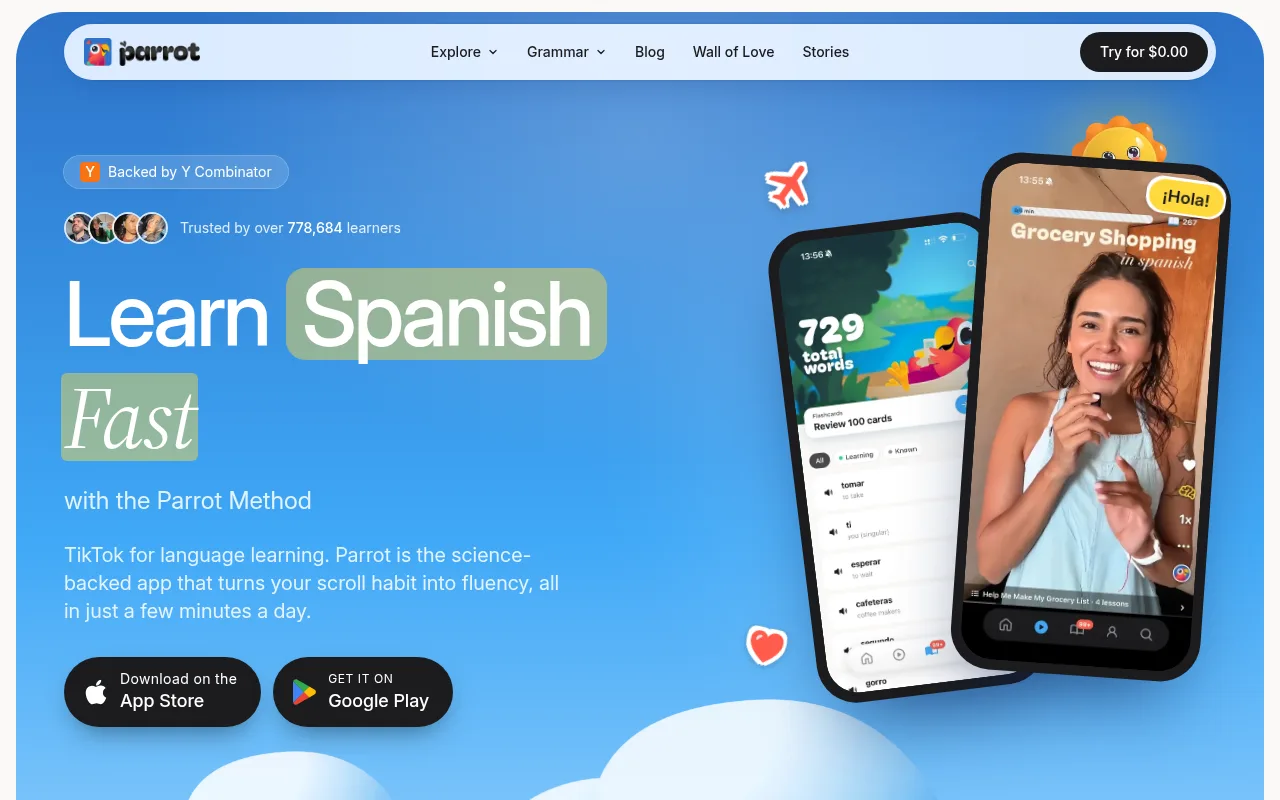
Most learners already spend a significant portion of their day scrolling short-form video. Every minute of that passive feed is a minute of comprehensible English input that never happened. Parrot replaces that scroll feed with TikTok-style clips from real native speakers matched to your level, so the habit that was quietly working against fluency becomes the mechanism that builds it, during a commute, a lunch break, or a few spare minutes before bed. No new time block required, no streak to maintain.
Parrot's short-form video feed is governed by the Comprehensible Input Method: an AI-driven sequencing layer that selects and orders content based on where each learner actually is, not where a generic syllabus assumes they are. That personalisation begins at sign-up with a placement test, so the feed is calibrated from the first session rather than defaulting to beginner clips for everyone. The method is grounded in Krashen's comprehensible-input research and consistent with studies showing that high-frequency, native-speed exposure produces stronger conversational gains than isolated drill practice, a principle Parrot's feed is built around. It is most beneficial when a learner has struggled with traditional memorisation-based methods and wants a research-backed alternative.
Passive immersion is only half the loop. Say out loud and repeat what you hear to build speaking confidence and sharpen comprehension, available during or after video sessions, when a learner wants targeted practice beyond watching. For learners who want to go further, speaking activities with pronunciation scoring are built into the listening experience.
Parrot scores pronunciation with proprietary models it built and trained. Listening comes first; speaking is about 20% of the experience. Verb conjugations and grammar insights are surfaced in context rather than as standalone drills, reinforcing what appears in the feed.
20%
of the experience
Parrot Premium is available on monthly and annual plans (US prices; pricing is localised by country, so other markets see different prices). The annual plan comes with a free trial that unlocks full Premium access, a card is required to start, and Parrot sends a reminder before the trial ends so you are never charged without warning. The weekly plan shown in some App Store listings is no longer offered; Parrot's own pricing is the authoritative source.
After the trial, nothing carries over for free today, though a free tier is in development. Refunds are available on request and no one is turned down; App Store purchases follow Apple's refund process. That refund policy matters: it means the trial is a genuine test drive, not a lock-in.
The one honest tradeoff: Parrot teaches Spanish today; French, English, and Italian are coming soon (no launch dates).
2. Duolingo - Best Free App for Building a Daily English Habit
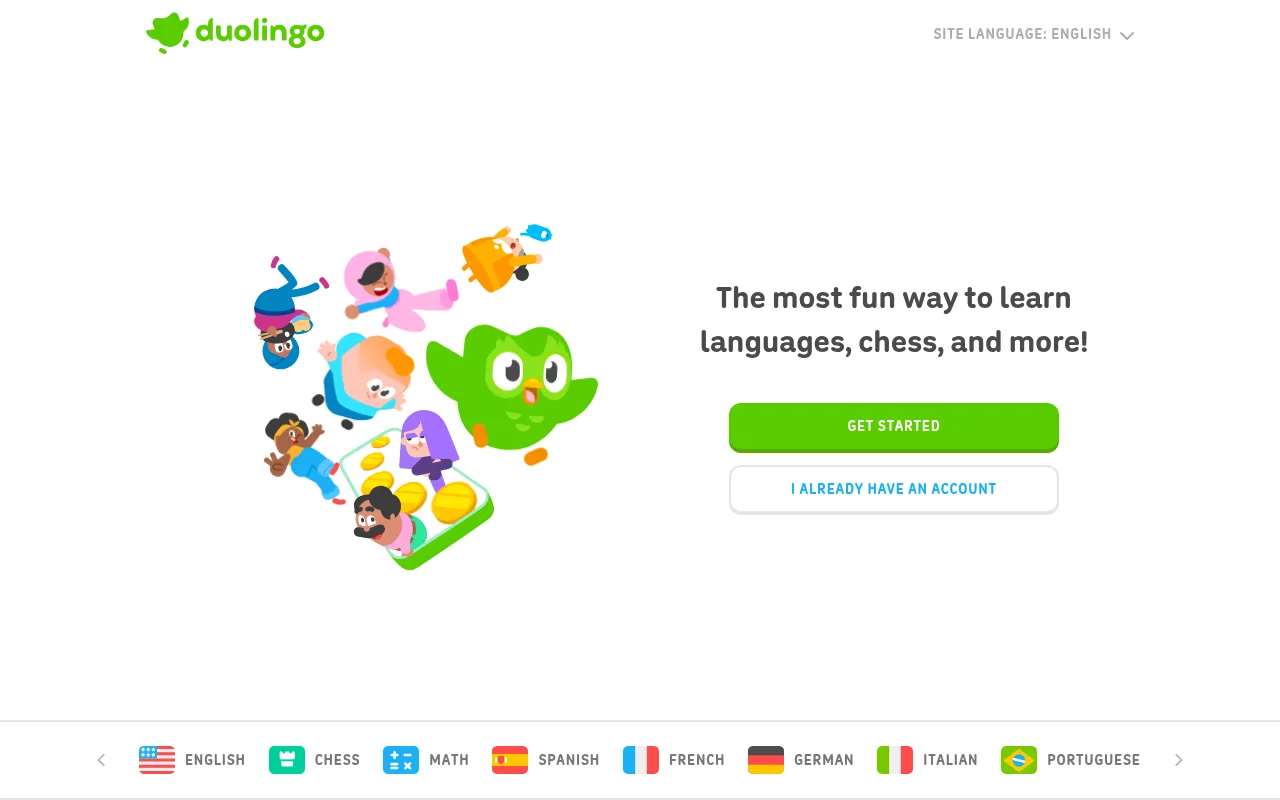
For beginners who need a low-friction entry point, Duolingo is the strongest habit-formation tool available at no cost. Duolingo's own year-end language insights confirm that streak maintenance is the primary driver of continued app usage, and English is the most studied language on the platform globally. Duolingo's streak mechanic is one of the most effective habit-formation systems in consumer software, and for beginners who need a low-friction daily anchor it is genuinely hard to beat. The honest limitation is that streak activity measures app loyalty rather than conversational fluency, so if holding a real conversation is your near-term goal it works best as a consistency layer alongside a tool that exposes you to native-speed spoken English.
3. ELSA Speak - Best App for Fixing English Pronunciation with AI Feedback
ELSA Speak uses voice recognition to score your speech at the phoneme level, flagging the exact sounds that make a native speaker ask you to repeat yourself. Research on AI-driven pronunciation coaching, including published evaluations of ELSA's phoneme-recognition engine, has shown measurable improvements in accent clarity after consistent use, making it one of the most focused single-purpose tools for pronunciation on this list. It is most beneficial when you already have intermediate vocabulary and grammar but your spoken output still sounds unclear to native ears. The tradeoff: it does not build listening comprehension or conversational flow, so it works best alongside a speaking-practice app, not as a standalone.
4. Babbel - Best Structured Grammar and Writing App for Adult Learners
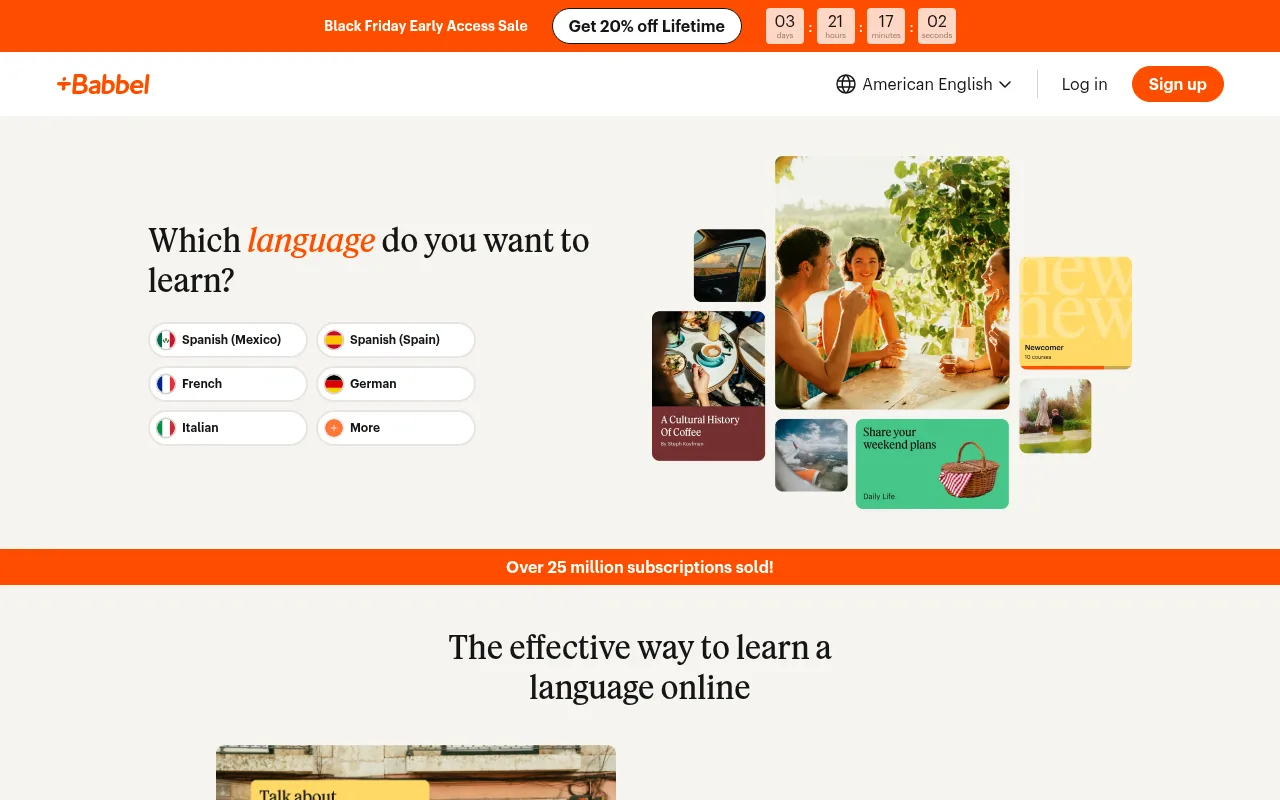
Babbel is teacher-designed, structured, and built around practical conversation scripts, which makes it a reliable choice for adult learners who want a clear syllabus rather than an open-ended feed. Its lessons run 10 to 15 minutes and cover grammar in context rather than in isolation. Babbel's teacher-designed curriculum is one of the most thoughtfully sequenced on the market for adult learners who want clear grammar-in-context instruction. The honest trade-off is that structured drills, however well-designed, are a different cognitive activity from listening to a native speaker at full conversational pace, so learners whose primary goal is real-time listening comprehension will want to pair Babbel with a tool that delivers that exposure.
5. italki - Best App for Private Online Lessons with Real English Teachers
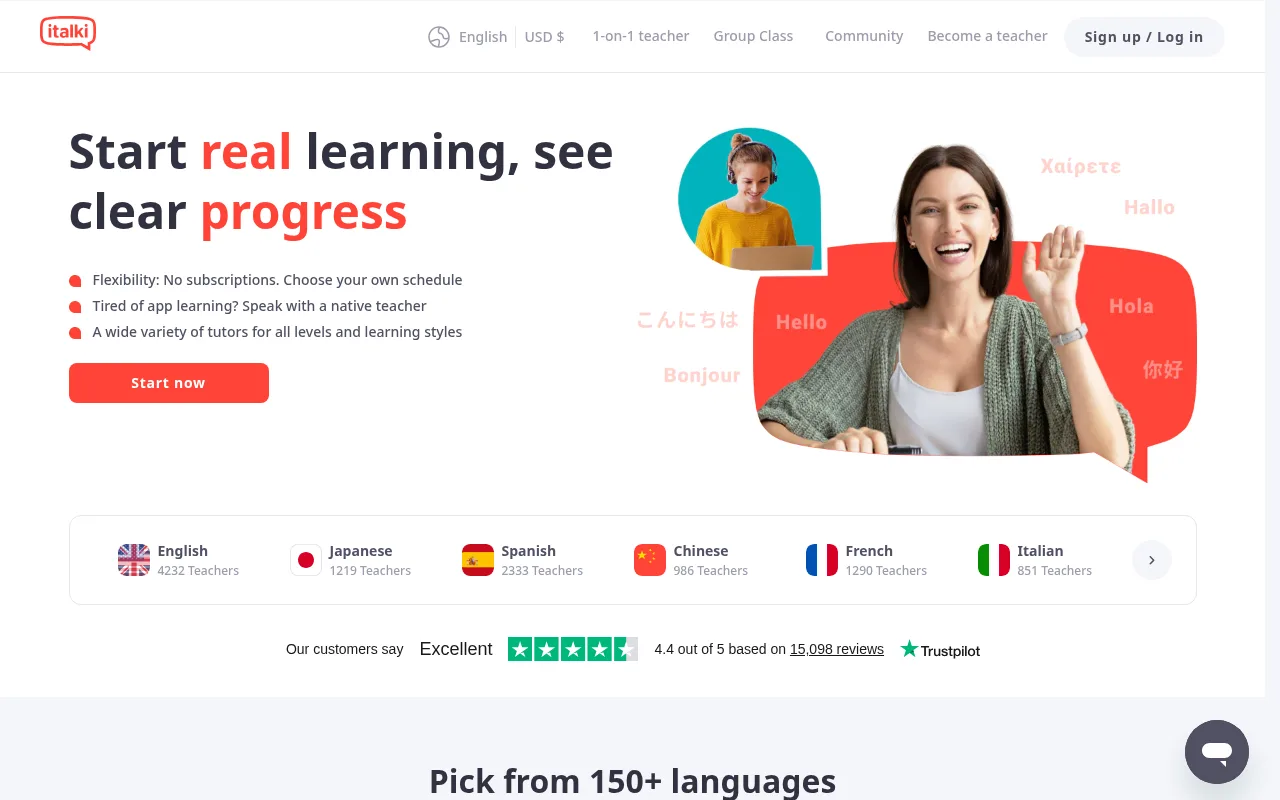
italki connects learners with professional English tutors and community tutors for one-on-one video lessons, with rates varying depending on the teacher's credentials and experience. Research on self-study versus human instruction consistently shows that live conversation practice with a tutor accelerates speaking fluency faster than solo app use alone, because a tutor responds to your actual errors in real time, a finding documented in multiple interactional competence studies, including Long's (1996) Interaction Hypothesis, which established corrective feedback as a key mechanism in second-language acquisition. The limitation is scheduling: italki requires you to book a session in advance, which means it demands a dedicated time block rather than fitting into a commute or lunch break.
6. Cambly - Best App for Instant Conversation Practice with Native English Speakers
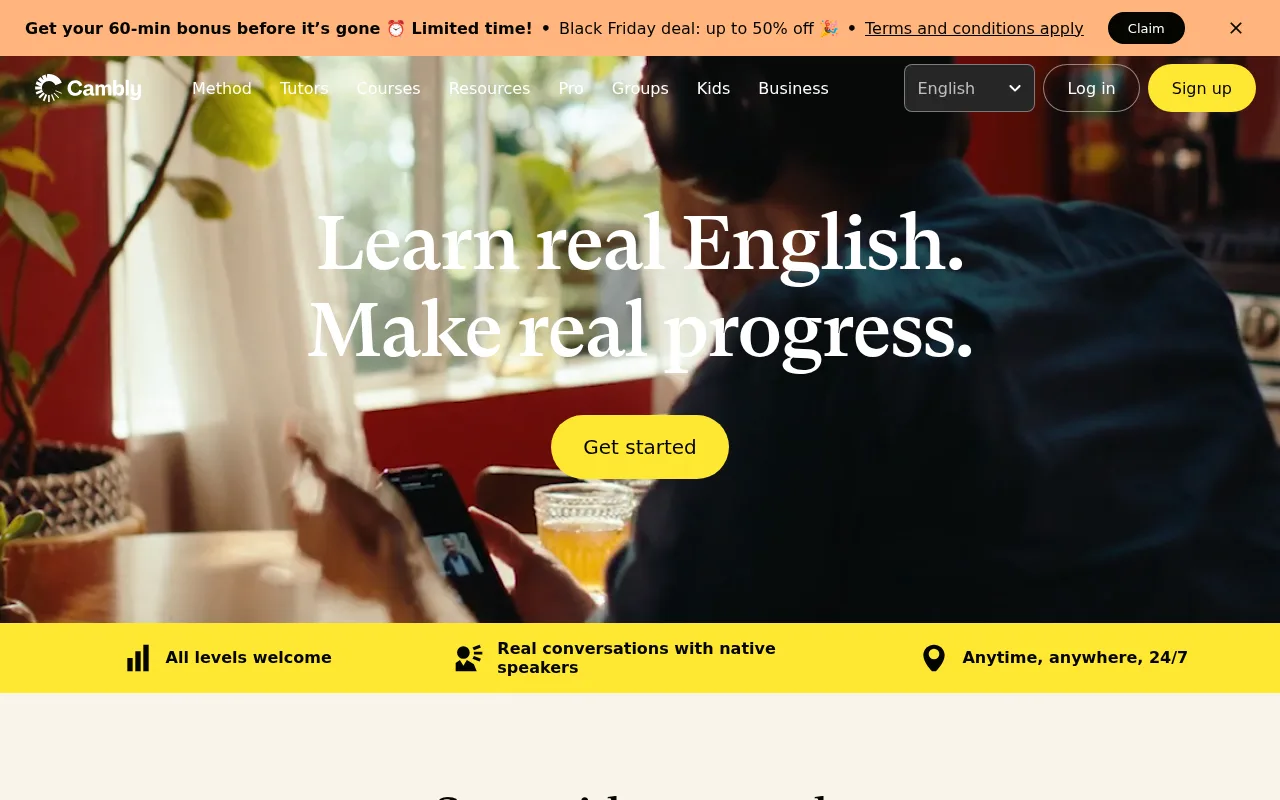
Cambly solves the scheduling problem that italki has: you can connect with a native English-speaking tutor in under a minute, any time of day or night. That on-demand model makes it the strongest option for learners who want real conversation practice without committing to a fixed weekly appointment. The tradeoff is cost per minute, which adds up quickly if you use it daily. Cambly is most beneficial for intermediate to advanced learners who already have enough vocabulary to sustain a conversation and need volume of real speaking time more than structured instruction.
7. HelloTalk - Best Free App for Native Speaker Language Exchange
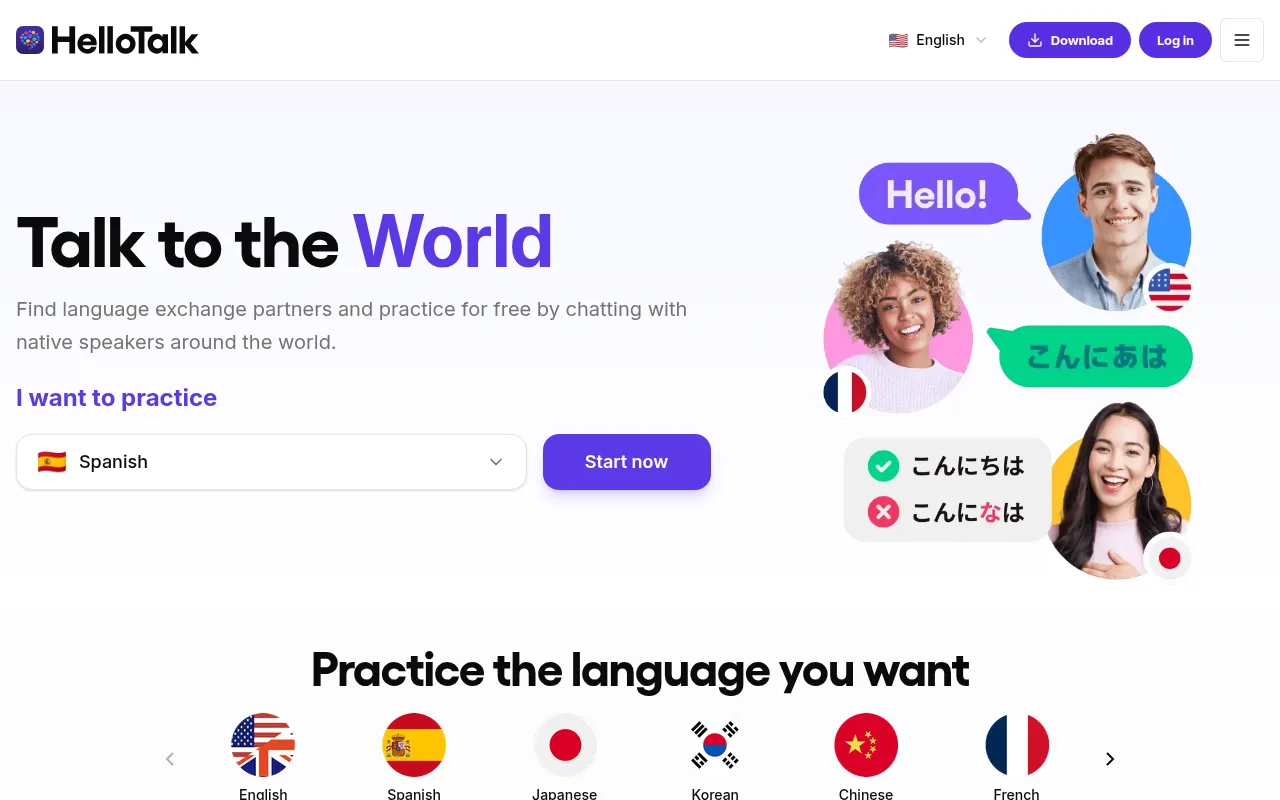
HelloTalk connects you with native English speakers who want to learn your language in return, enabling free text, voice, and video exchanges that replicate real conversation without a tutor fee. Threads across language learning communities consistently surface HelloTalk as the top free option for genuine back-and-forth practice, particularly for learners who cannot afford paid tutoring. The honest limitation is reciprocity: your exchange partner is not a teacher, so error correction is inconsistent, and conversations can stall if both parties are at low proficiency. It rewards learners who are proactive about initiating and sustaining exchanges.
8. FluentU - Best App for Learning English Through Real-World Video Content
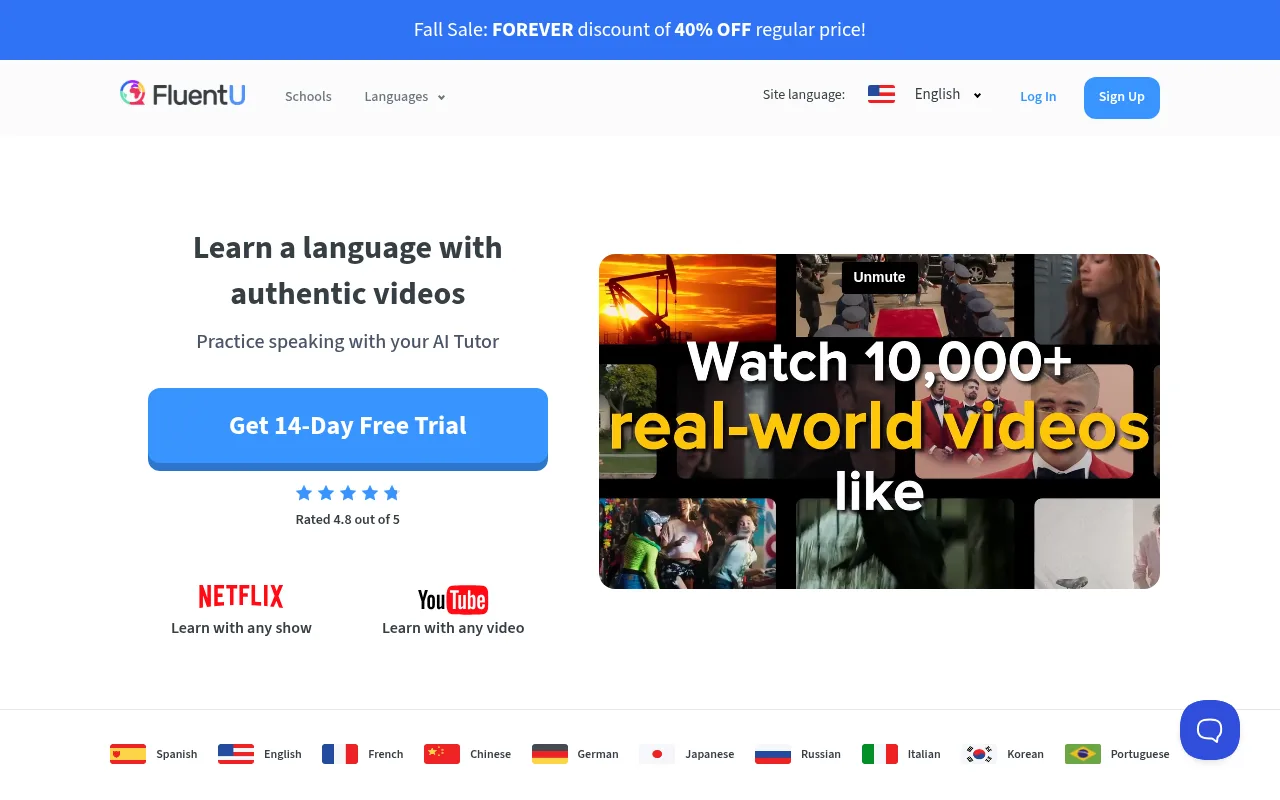
FluentU turns real-world videos, movie trailers, news clips, and YouTube content into interactive comprehensible input sessions with subtitles, vocabulary popups, and comprehension questions. The mechanism is genuinely closer to immersion than most grammar-first apps, which is why it appears consistently in "best immersion" discussions among serious learners. The significant limitation is cost: FluentU has no meaningful free tier, and its subscription price sits noticeably higher than free alternatives like HelloTalk and LingoClip. It is the right pick for intermediate learners who want curated real-world video input and are willing to pay for it.
9. LingoClip - Best App for Learning English Vocabulary Through Music Lyrics
LingoClip trains your ear for fast native speech by turning music videos into fill-in-the-blank lyric games, which makes it one of the most painless vocabulary apps available for commute or downtime listening. Music is a proven memory anchor: the rhythm and melody of a song encode vocabulary in a way that a flashcard rarely does. The tradeoff is scope. LingoClip builds listening comprehension and vocabulary recognition within the specific cadence of song lyrics, which does not always transfer directly to conversational speed or unscripted dialogue. Use it as a supplement to speaking practice, not a replacement.
Related Reading
How Long Does It Take To Learn English Fluently
Learning English As A Second Language
Tof
Game To Learn English
How To Learn English Speaking At Home
Types Of Music Good For Learning English
English Learning Activities
Best Websites To Learn English
Best Podcasts For Learning English
English Learning App For Kids
How to Pick the Right English App for Your Skill Level and Daily Schedule
That match between app and learner is what determines whether a tool accelerates progress or simply fills time.
A 4.7-star App Store rating from 23,000 ratings and a 4.6-star Google Play rating from 1,060 ratings (November 2026) tell you nothing about whether an app fits a 10-minute commute or a 30-minute evening session.
The 2-Axis Filter - Match Your Goal to Your Available Time Before You Download Anything
You need an app built for micro-sessions rather than one that rewards scheduled blocks. In a March 2025 app analysis, short-form tools like LingoClip sit comfortably inside that window, requiring users to fill in lyric gaps, select options, or engage in karaoke mode to build vocabulary, listening comprehension, and pronunciation. Apps that fit into micro-learning windows are not equally useful just because they are equally short, and schedule fit alone is a dangerously incomplete filter, a distinction supported by cognitive-load research showing that the type of processing demanded in a session (passive recognition vs. active comprehensible input) predicts acquisition outcomes more reliably than session length alone.
The critical variable is what happens inside those 10 minutes, and choosing on convenience without auditing that is what locks fluency at the beginner ceiling for years.
On the scheduled-session side of the axis, ZEGOCLOUD's analysis confirms that italki and Cambly require scheduled, paid bookings and suit intermediate-to-advanced learners with dedicated time blocks rather than micro-learning moments.
Skill-Level Routing - Which Apps Reward Beginners vs. Which Finally Challenge Intermediate and Advanced Learners
That stall is the signal to route toward comprehensible input from native speakers rather than more structured drills. This is where Parrot's short-form video feed earns its place in the sub-10-minute column: a placement test routes you immediately into content pitched at the right difficulty level, so you are processing native speech from the first scroll rather than sitting through content you already know.
Free Tier vs. Paywall Reality Check
ZEGOCLOUD's March 2025 breakdown confirms that gamified apps typically offer a functional free tier supported by ads, with premium tiers removing friction rather than unlocking core learning. Conversation-tutor platforms are structurally different: italki's free tier includes access to community features, vocabulary tools, podcasts, quizzes, prompts, and a free language assessment, so it delivers a genuine (if limited) learning experience, while Cambly requires paid bookings for any meaningful tutor access, leaving the free tier as essentially a browsing experience.
Next steps
If your daily app sessions keep ending in XP points rather than real conversations, the path forward starts with matching your tool to the goal you actually have. An app engineered for casual engagement will never produce a fluency outcome by accident, no matter how long the streak grows. Start with our learn Spanish.
The app landscape splits into two parallel tracks heading to different destinations, and choosing the wrong one means every minute of practice trains the wrong skill. A session spent tapping translation tiles trains passive recognition, while a session spent hearing and processing native-speed speech trains the listening and speaking circuitry that real conversations actually demand. Together, these two realities point to one practical move: find a tool built around comprehensible input from real native speakers, not one built around keeping you opening the app.
Start with Parrot's short-form video feed, where a placement test routes you into native-speed content calibrated to your level from the first session. A free trial on the annual plan gives you full access to the feed, the speaking practice, and the AI tutor before you commit.
Frequently Asked Questions
What's the real difference between Babbel and Duolingo for learning English?
They optimize for different things. Duolingo is built around habit formation, its streak mechanic keeps absolute beginners returning daily, but streak activity measures app loyalty rather than conversational fluency. Babbel focuses on a structured grammar foundation, including verb conjugations and grammar insights, that gives adult learners confidence before they speak. Neither was designed primarily around producing fluent spoken output in real-world conditions.
I'm an intermediate learner who already knows grammar basics, which type of app should I be looking for?
The post recommends prioritizing apps that expose you to real native-speaker content at natural speed rather than controlled drills, since intermediate learners typically already have grammar awareness but struggle with real-world listening comprehension and spoken output. The key questions to ask are whether the app requires you to produce spoken sentences (not just tap correct answers) and whether it uses authentic audio or video matched to your current level.
Why do words I know inside an app completely disappear when I'm talking to a real person?
The post explains this as an architecture problem, not a memory or motivation problem. Most apps train pattern-matching through recognition tasks, matching words, tapping correct tiles, rather than producing spoken output under real conversational pressure. Because they never simulate authentic conversational pressure, words that felt secure in the app evaporate the moment a real person is waiting for a response.
Can I realistically become conversational in English in 30 days with an app?
The post doesn't promise a 30-day timeline, but it does identify what actually drives progress: frequent, short sessions of comprehensible input, real native-speed content matched just above your current level, integrated into existing daily routines rather than dedicated study blocks. Industry research cited in the post confirms that frequency of comprehensible exposure, not session length, is what converts input into speaking ability.