
Most Rocket French reviews are written by people paid to sell it. Here is what they cannot tell you: whether a busy adult beginner will actually finish it.
Search results and affiliate commission pages tell you whether a course is sellable. They almost never tell you whether it will work for a busy adult who has already quit two other French courses. That gap is not accidental.
Before you trust any Rocket French review you find online, it helps to understand exactly who wrote it and what they were actually trying to answer. The Rocket Languages affiliate program pays partners a commission on every sale they refer. That single fact reframes every glowing five-star breakdown you have ever read.
The reviewer's financial outcome improves when you click "buy," which means the question guiding their analysis is "can I make this product sound compelling enough to earn a click?" rather than "will this fit your life?"
A common pattern emerges across top-ranking review sites in the language-learning category: the overwhelming majority carry affiliate links. The incentive is structural, not personal. A reviewer may genuinely like the course content and still be constitutionally unable to tell you that you will probably never finish it, because that conclusion kills the commission.
The completion data is brutal. According to the International Review of Research in Open and Distributed Learning, MOOC completion rates typically sit between 5% and 15%. A review that scores the audio quality and ignores that structural reality is answering the wrong question.
Format fit is the real purchase risk.
Session length against a buyer's realistic daily availability
Completion likelihood given the course's sequential structure
Whether the learning mechanism matches how adult acquisition actually works under time pressure
What appears on affiliate review sites instead is a feature checklist: audio lessons, speech recognition, cultural content, lifetime access. Useful details, none of them decisive.
Key takeaways
Most Rocket French reviews are written by affiliates earning commissions, they tell you whether the course is sellable, not whether a busy adult will finish it.
Rocket French is built for a learner who has a reliable, uninterrupted 30-to-45 minute block every single day, that person is rarer than the marketing assumes.
Self-paced online courses average 10-20% completion rates, and structured sequential language courses sit at the harder end of that range.
Grammar drilling feels like progress but doesn't produce speech, Stephen Krashen's acquisition research draws a hard line between drilling rules and actually internalizing a language.
The real cost of an unfinished course isn't the price tag; it's the six months of lost acquisition time while the course sits unopened.
Short, repeated exposure to real native-speaker content beats long structured sessions for time-constrained adults, the research on comprehensible input backs this up.
Parrot's short-form native-speaker video feed closes that gap directly: a TikTok-style scroll of real French content matched to your level, built for the five-minute windows you already have.
How the Rocket French Course Actually Works Before You Pay
According to PolyChat's 2024 review of adult language learning apps, Rocket French is an activities-based course built around three core module types:

Interactive Audio Lessons, where a native French speaker and an English narrator walk through dialogues together, pausing to explain grammar and prompt you to repeat phrases aloud.
Language and Culture lessons, which layer in reading, writing, and contextual knowledge.
Survival Kit modules, which cover high-frequency phrases for practical situations.
The sequence matters.
Each module type builds on the last, so skipping ahead or cherry-picking lessons leaves gaps the course assumes you've already filled.
It also means you can't dip in and out the way you might with a scrollable content feed.
There's also a financial architecture that compounds the time commitment.
Rocket Languages requires you to purchase Level 1 and Level 2 separately just to unlock Level 3, a structure that pushes the total cost to a significant sum before you've completed the full course.
For adult beginners already uncertain whether they'll stick with a program, that stacked pricing is a significant barrier that often only becomes clear after the first purchase.
What a Single Rocket French Session Demands From Your Day
Typical sessions run 30 to 45 minutes, according to PolyChat's 2024 analysis. That's a commitment closer to a gym session, and it needs to happen consistently to keep pace with the sequential structure. The format assumes a daily schedule most buyers don't have, and that mismatch quietly filters out the exact learner most likely to purchase it. Beginners we work with at Parrot typically learn during commutes, lunch breaks, and the twenty minutes before bed rather than at a dedicated desk.
✓ Pros
✗ Cons
Structured, grammar-rich, feels like a real course
Stacked pricing is a significant barrier
Interactive Audio Lessons walk through dialogues with native speaker
Sequential structure means you can't dip in and out
Language and Culture lessons layer in reading, writing, and contextual knowledge
Sessions run 30 to 45 minutes demanding daily commitment
Rocket Record scores pronunciation against a native-speaker waveform
Offline access requires manually downloading audio files
Rocket Record, the course's speech recognition tool, scores your pronunciation attempt against a native-speaker waveform. Offline access is not automatic. PolyChat's same-figure analysis confirms it requires manually downloading audio files rather than any seamless sync. With those demands on time, attention, and wallet now clear, the real question is whether the course delivers on that investment, and that's where 13 honest review signals, rated against the busy adult beginner's reality, tell a more useful story than any single verdict ever could.
8 Rocket French Reviews Rated Honestly So You Can Decide
That structural friction matters because it sits inside a much larger pattern: self-paced online courses average 10-20% completion rates, meaning the majority of buyers never finish what they purchase, and structured language courses, with their long sequential sessions, sit at the more challenging end of that range. It is the structural reality behind every "lifetime access" purchase in self-paced language learning, and it reframes every Rocket French review you have read so far. 59 out of 5 from 1,160 ratings.
That score measures the product. It tells you nothing about whether a busy adult beginner will still be opening the app in six weeks. The assigned insight here is worth sitting with: a high satisfaction score and a one-time payment create a dangerous illusion of value.
Learners pay once, rate the content positively, and conflate "this is a good course" with "this will work for me." Those are two entirely different questions, and the 13 review signals below answer both.
1. Rocket French Pricing Tiers - One-Time Cost vs. Subscription Value
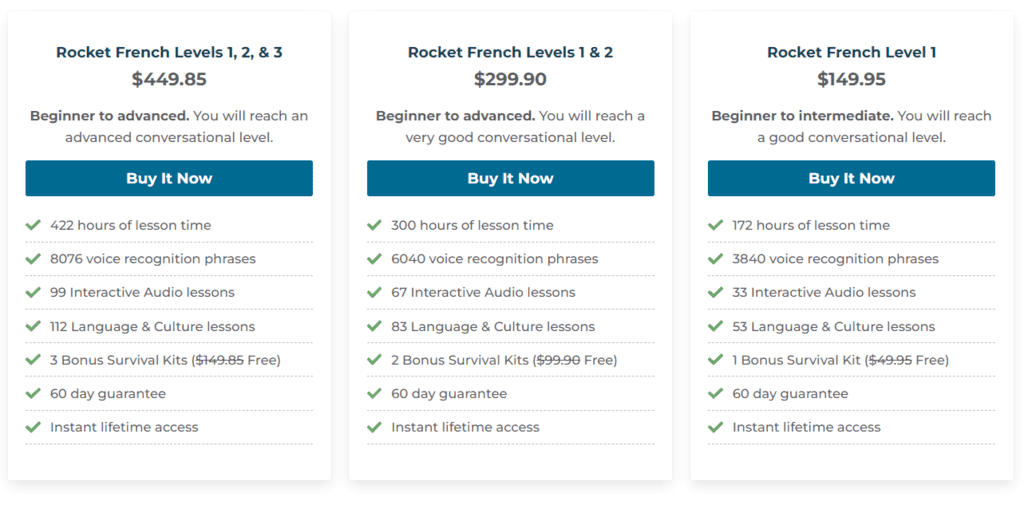
Rocket Languages sells Rocket French as a one-time purchase across three tiers: Level 1 alone, Levels 1 and 2 bundled, and the full Levels 1 through 3 package, with checkout prices varying depending on the discount active at the time of purchase. The one-time model looks attractive against a recurring subscription, but it cuts both ways: you pay the full price upfront whether you finish the course or not. The high upfront cost is a genuine barrier for motivated beginners who are not yet certain the format will fit their life.
That hesitation is well-founded. For a busy adult who realistically has 10 to 15 minutes a day, the sunk cost can become a source of guilt rather than motivation. Families considering the course face the same calculus multiplied: a single license at that price point is a meaningful commitment for a household hoping to find a tool the whole family can use together in short daily sessions, and Rocket French's 20-to-30-minute sequential structure is not that tool.
2. Audio Lesson Format - Dialogue-Driven Immersion With Transcripts
The Interactive Audio Lessons are the strongest part of the Rocket French experience. Each one pairs a native-speaker dialogue with a bilingual host who explains what is happening in real time, and transcripts let you read along as you listen. The format works well for learners who can sit at a screen. It does not translate cleanly to a commute or a walk, because the transcript-dependent design means audio-only engagement misses a meaningful portion of what the lesson is actually teaching. This is the core delivery mechanism of the entire app.
3. Grammar Instruction Depth - Structured Explanations Beyond Gamified Apps
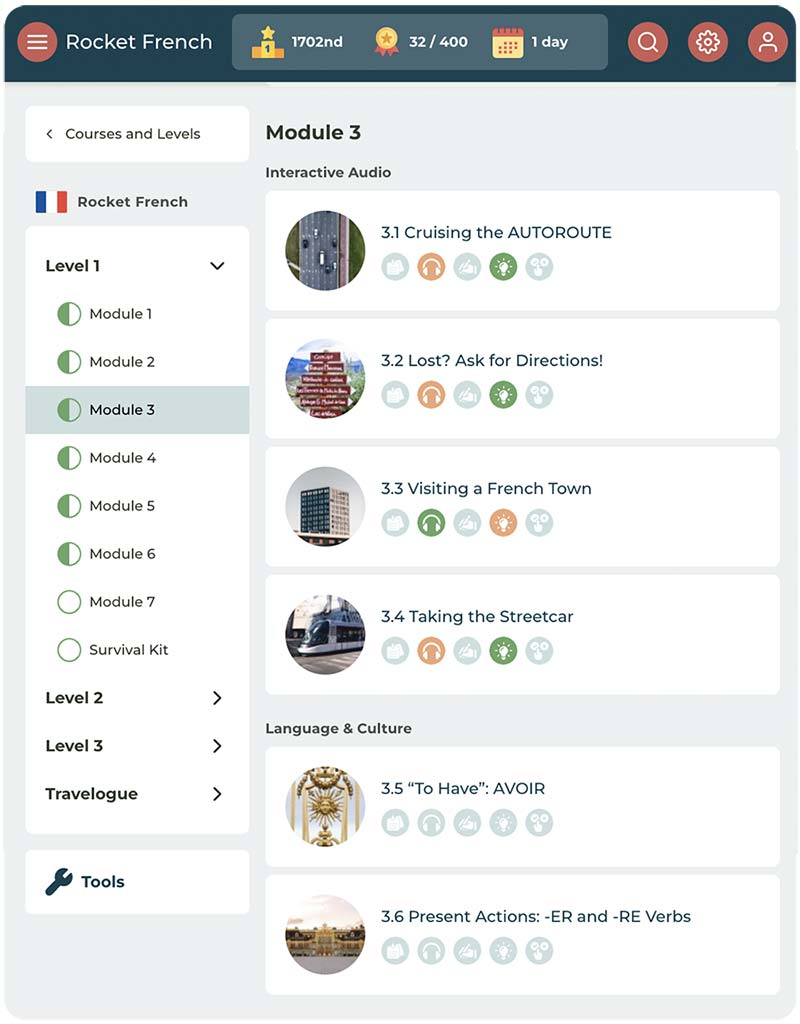
Rocket French explains grammar rather than hiding it inside games, and that genuinely separates it from lighter apps. For learners who want to understand why a sentence works, not just repeat it, the Language and Culture lessons provide structured explanations with examples. The tradeoff is density: grammar-heavy sessions demand focused attention, which is the one resource busy adult beginners are least likely to have in reliable supply. Parrot is most beneficial when a learner has struggled with traditional memorization-based methods and wants a research-backed alternative, the Comprehensible Input Method underlies every video session, governing how content is selected and sequenced, so acquisition happens through exposure rather than through sitting with grammar tables.
4. Spaced Repetition and Flashcard System - Volume vs. Timing Precision
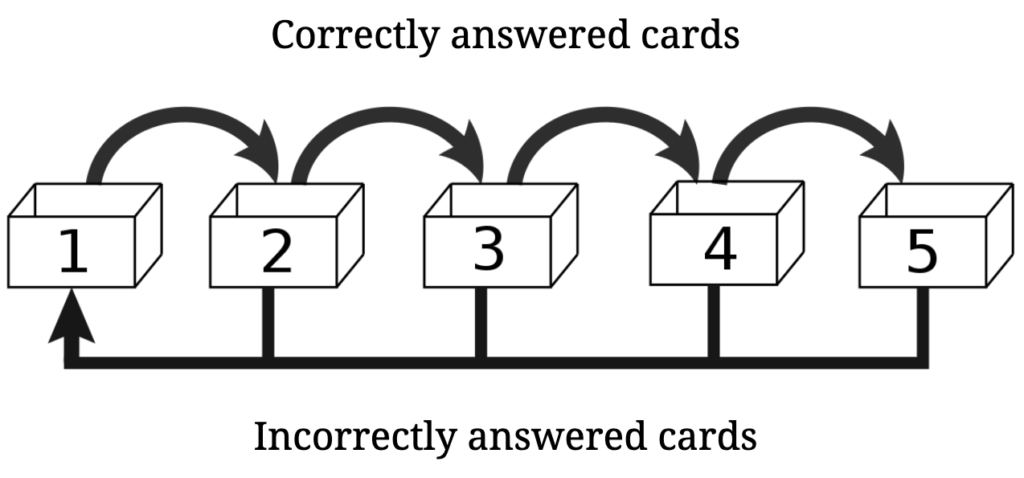
Ebbinghaus's forgetting curve research established that the timing of a review session matters as much as the review itself. Rocket French includes a flashcard system, but the scheduling is largely learner-managed, meaning you decide when to return to a card. For irregular learners, that self-scheduling requirement is a real methodological tradeoff: without precise interval timing, the system loses much of its retention advantage and becomes a vocabulary list with extra steps.
Absolute beginners get a genuine foundation from Level 1. The course starts from zero, introduces pronunciation early, and builds vocabulary through repeated dialogue exposure. The caveat is pacing: a widely cited independent review by Copycat Cafe notes that Rocket French lessons generally clock in at around 20 to 30 minutes each, making them substantially longer than most competing apps.
A beginner who cannot protect a 25-minute block daily will find the course's sequential structure starts to feel like a wall within the first two weeks.
5. Suitability for Absolute Beginners - Strong Start With Caveats
Rocket French Level 1 is designed for zero-prior-knowledge learners and does a solid job introducing vocabulary, basic grammar, and conversational phrases through guided audio. However, beginners who need heavy repetition and tight pacing may find Pimsleur's structured daily lessons easier to follow. Rocket French rewards beginners who are willing to engage actively with flashcards, grammar notes, and self-directed review rather than those who want a fully guided, low-effort onboarding experience.
6. Fit Verdict for Commuters and Audio-Only Learners - A Poor Match
Offline audio access requires manually downloading files, and the most instructionally rich parts of the course (grammar explanations, flashcard reviews, Rocket Record pronunciation checks) are screen-dependent. Commuters who hoped to run Rocket French through their earbuds during a 20-minute train ride will find the experience thin. The audio lessons work in isolation, but they were designed as one component of a multi-modal session, not as a standalone listening format. Parrot's short-form video feed is designed for exactly that fragmented window: every video watched immediately contributes to listening comprehension, and the Parrot Back speaking practice feature means active production is available in the same session, no separate screen-locked module required.
7. Course Completion Rates and Self-Discipline Requirement - The Dropout Risk
This is the signal most Rocket French reviews skip entirely. Research on self-paced online courses consistently finds that 87.4% of online courses never get finished, and dropout rates accelerate when sessions demand long, uninterrupted blocks of time. Copycat Cafe's independent review confirms Rocket French's 20 to 30 minute lesson format sits right at that threshold.
The course demands consistent, scheduled study time that casual or irregular learners are unlikely to sustain, which means the format itself, not a learner's motivation, is the primary dropout driver. The instinct to want a structured, comprehensive course is completely reasonable. Feeling like you are doing something serious is part of what makes Rocket French appealing after a gamified app left you feeling like you were playing a game instead of learning a language.
But the hidden cost surfaces fast: when a course demands 25-minute screen sessions, sequential grammar module focus, and self-scheduled flashcard reviews, it does not fit into the 10 minutes you actually have between meetings. That mismatch is what turns a lifetime purchase into a lifetime of guilt. Parrot's short-form native-speaker video feed converts the dead-scroll time you already have into real French acquisition, without requiring you to carve out a study block you will never consistently protect.
For learners who want active, personalized practice on top of immersive video content, Parrot Back speaking practice is available during or after video sessions, immediate feedback without booking a separate lesson or managing a flashcard queue.
8. Writing and Accent Training - A Genuine Differentiator Over Audio-Only Rivals
4%
of online courses never get finished
Rocket French teaches written French alongside spoken French, which is a real advantage over audio-only programs. Learners who want to read menus, write emails, or understand subtitles will find the written component genuinely useful. Accent training through Rocket Record adds another layer, though the automated speech recognition has documented accuracy limitations with fine phonetic distinctions in French, meaning the feedback is directional rather than precise.
Should You Buy Rocket French?
A Quick-Decision Checklist for the Busy Adult Beginner
Use this checklist before purchasing. If you answer Yes to 4 or more questions, Rocket French is likely a good fit. If you answer No to 3 or more, a format-matched alternative will serve you better.
Decision Criterion - Yes / No
Can I reliably protect 25-30 minutes of screen time daily?
☐
☐
Am I comfortable studying sequentially (no skipping ahead)?
☐
☐
Do I prefer grammar explanations over immersive listening?
☐
☐
Will I manually download audio files before commuting?
☐
☐
Do I have a desktop or tablet available for most sessions?
☐
☐
Am I motivated by self-tracked progress without external accountability?
☐
☐
Is a one-time 50-$450 investment comfortable if I don't finish?
☐
☐
Rocket French is well-built content inside a format that structurally disadvantages the most common buyer. 59-star rating reflects genuine content quality. It does not reflect whether a busy adult beginner with 10 to 15 daily minutes, no fixed study schedule, and a preference for conversational French over grammar tables will still be using it in month two.
For that learner, the course's volume is not a feature. It is the primary barrier. Eight dimensions.
One pattern: Rocket French rewards the learner who already has the discipline, the screen time, and the structured-study mindset, and quietly punishes everyone else. Before you decide which side of that line you're on, there's one more verdict to hear, the one most reviews skip entirely because it requires them to say something the course's affiliate commission depends on them not saying.
Related Reading
French Language Learning Resources
Fastest Way To Learn French
Best App To Learn French For Travel
Best Books To Learn French
How Long To Learn French
How To Conjugate Re Verbs In French
French Alphabet Pronunciation
How To Learn French Through Conversation
How To Learn French With Movies
Learning Resources For African French
The Verdict on Rocket French Most Reviews Won't Give You
The course's design philosophy is worth understanding before evaluating its features. What follows breaks down exactly who Rocket French was built for, why its rigour is an asset for that specific learner, and why the same design becomes an attrition driver for everyone else.
Rocket French Is a Great Course for a Learner Who Doesn't Exist in Most People's Lives
The learner Rocket French is built for has something genuinely rare: a reliable, uninterrupted 30-to-45 minute block every single day. Completion research consistently shows that structure alone does not sustain self-directed learners when life competes for time: a University of Florida Institute of Higher Education study found that learners enrolled exclusively in online programs were less likely to complete their coursework than peers who had any face-to-face component. A course that requires protected daily sessions quietly filters out anyone whose life does not already have those sessions built in.
The Real Evaluation Question Isn't "Is It Good?" It's "Does This Method Match How You'll Actually Use It?"

The features that make Rocket French feel credible, its sequential lessons, grammar-first structure, and desktop speech tool, are the same features that research identifies as primary attrition drivers for self-directed online learners. Comprehensible input research, grounded in Stephen Krashen's acquisition theory, consistently shows that exposure to real, level-matched content in short, frequent sessions outperforms explicit grammar instruction for conversational fluency, which means the course's greatest structural strengths can work against learners whose schedules demand flexibility rather than depth.
An unopened course teaches you nothing; costs confidence when unfinished
The Rocket French overall verdict splits cleanly on one variable: available session time. If you can protect 30 minutes daily, Rocket French is worth it. The content quality, audio depth, and grammar scaffolding are genuine. If you cannot, the real cost is not the subscription fee, it is the confidence you lose when another program sits unfinished on a browser tab, and that cost is worth weighing honestly before you begin.
What Busy Beginners Who Skip Rocket French Do Instead to Actually Speak French
The research points to a different mechanism entirely, and for a time-constrained adult, that difference is the gap between speaking French in six months and abandoning another course by week three.
Why Your Brain Acquires French Through Listening Not Drilling
"As a busy beginner, I feel stuck after gamified apps like Duolingo and don't know what to try next to actually speak French conversationally."
— what we hear from busy adult French learners

Stephen Krashen's 1987 acquisition research draws a hard line between two processes: acquisition (subconscious, through meaningful exposure to the target language) and learning (conscious grammar study). His central finding is that acquisition drives real speaking ability; learning does not. When you spend your 15 minutes parsing a conjugation table, you are feeding the wrong process.
Your brain is not absorbing French; it is memorizing rules it will struggle to retrieve mid-conversation. Comprehensible input at the right level is what triggers acquisition. Krashen's input hypothesis positions input slightly beyond your current knowledge as the primary driver of second-language acquisition, not drills or explicit instruction.
Real spoken French, matched to your level, does what no grammar explanation can.
How to Build Real French Listening Habits in 10 Minutes a Day
A commuter who watches three or four short native-speaker French clips during a morning scroll builds listening comprehension continuously, in windows that already exist. A learner studying after a full workday is fighting both fatigue and a format designed for longer blocks. Replacing one 30-minute session with three scattered 10-minute comprehensible input sessions is not cutting corners.
For learners who want immersive, real-world French exposure but cannot carve out a dedicated study block, a TikTok-style scrollable feed is designed to convert existing scroll time into comprehensible input, applying the acquisition mechanism without requiring a separate scheduling commitment. Krashen's research argues the best acquisition methods supply comprehensible input in low-anxiety situations containing messages learners genuinely want to hear. A feed of real native content, chosen at your level, fits that description precisely.
A grammar module does not. Krashen's own comparative analysis found that learners in acquisition-rich, low-anxiety input environments consistently outpaced grammar-instruction groups on measures of communicative fluency. Beyond the question of method, though, there is one more risk the research does not warn you about: the course you buy with good intentions and never open past week two.
Next steps
If your real problem is swapping one unfinished course for another, the path forward starts with matching the learning mechanism to the time you actually have, not the time you wish you had. Start with our learn Spanish.
The completion research shows that even the most financially committed Rocket French buyers hit a structural wall before finishing, because the format demands 30-to-45-minute sequential sessions from adults whose days cannot reliably protect that block. Krashen's acquisition research adds the second piece: those sessions are largely feeding a conscious grammar-translation layer anyway, not the subconscious acquisition process that produces automatic, conversational French. Together, they point toward short, daily exposure to real spoken French at your level, not a more serious course.
Start with Parrot's comprehensible input feed. The same acquisition mechanism that works for French applies directly, delivered in the 10-to-15-minute windows you already have.
Frequently Asked Questions
Can I use Rocket French on my commute or just through earbuds?
It's a poor fit for audio-only listening. The most instructionally rich parts of the course, grammar explanations, flashcard reviews, and Rocket Record pronunciation checks, are screen-dependent, and offline audio access requires manually downloading files before you go. The audio lessons work in isolation, but they were designed as one component of a multi-modal session, not as a standalone listening format.
Does Rocket French cover grammar properly, or is it like a gamified app?
Rocket French explains grammar in structured detail rather than hiding it inside games, which genuinely separates it from lighter apps. The Language and Culture lessons provide explanations with examples so learners understand why a sentence works, not just how to repeat it. The tradeoff is that grammar-heavy sessions demand focused attention, the one resource busy adult beginners are least likely to have in reliable supply.
How long are the lessons, and do I really need to study every day?
Typical sessions run 30 to 45 minutes, and the sequential structure means skipping or irregular study leaves gaps the course assumes you've already filled. A beginner who cannot protect a 25-minute block daily will find the course starts to feel like a wall within the first two weeks.
Is Rocket French suitable for a complete beginner starting from zero?
Yes, Level 1 starts from zero, introduces pronunciation early, and builds vocabulary through repeated dialogue exposure. The caveat is that the 20-to-30-minute sequential lesson format is substantially longer than most competing apps, so absolute beginners who have limited daily time may hit the dropout risk that the post identifies as the course's primary structural weakness.
Do I have to buy all three levels upfront, or can I start with just Level 1?
You can start with Level 1 alone, but Rocket Languages requires you to purchase Level 1 and Level 2 separately just to unlock Level 3, pushing the total cost to a significant sum before you've completed the full course. For adult beginners already uncertain whether they'll stick with a program, that stacked pricing is a significant barrier that often only becomes clear after the first purchase.